


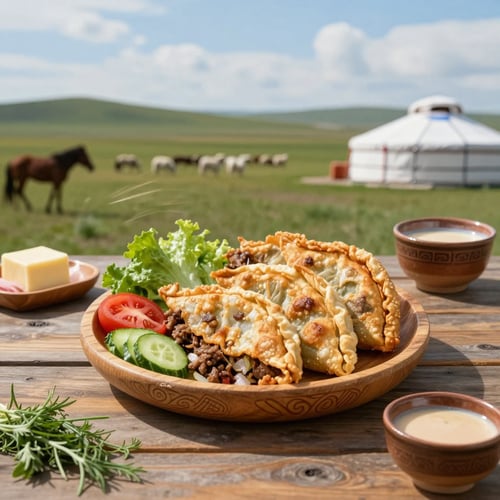
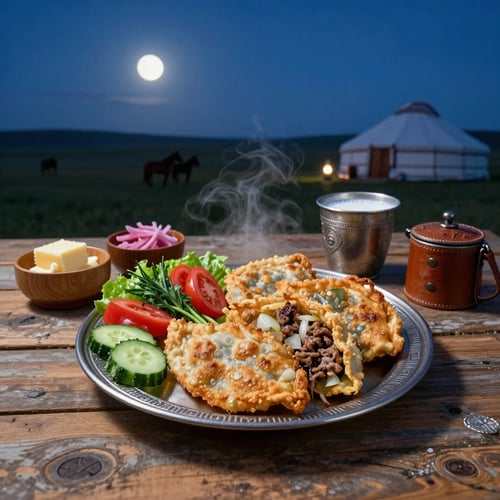
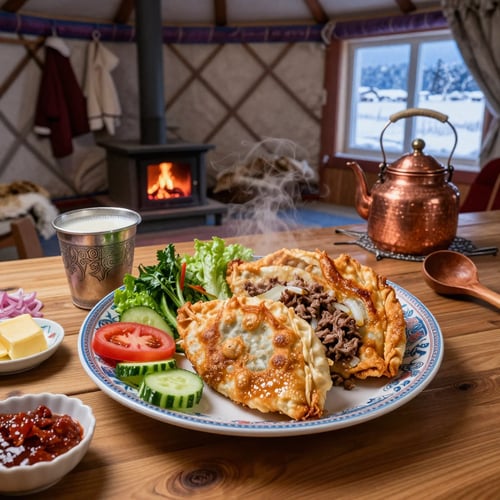
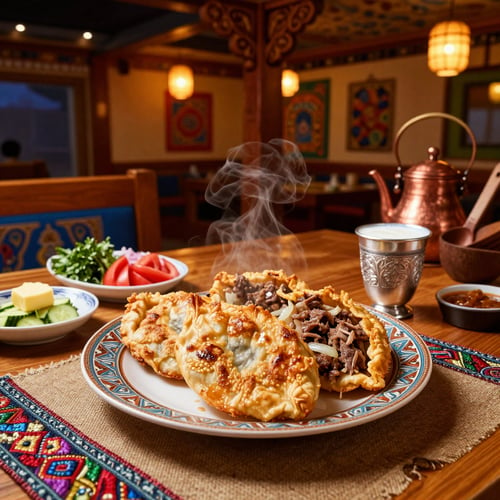
Mongolian dishes are deeply shaped by the harsh climate of the Central Asian steppe and the traditional nomadic lifestyle. The cuisine focuses on high-energy foods that provide warmth and long-lasting nutrition, relying heavily on meat, dairy products, and simple wheat-based staples. One of the most iconic dishes is Buuz, steamed dumplings filled with minced lamb or beef and onions, traditionally prepared in large quantities for the Lunar New Year celebration known as Tsagaan Sar. Another famous dish is Khuushuur, a deep-fried half-moon pastry stuffed with juicy minced meat, commonly enjoyed as street food and festival food. A beloved everyday meal is Tsuivan, stir-fried noodles cooked with sliced meat and vegetables, offering a comforting and filling dish for families. For special occasions, Mongolians prepare Khorkhog, a traditional barbecue where chunks of meat are cooked with hot stones inside a sealed metal container, creating tender and smoky flavors. An even more dramatic version is Boodog, in which an entire goat or marmot is cooked from the inside using heated stones, representing a unique nomadic cooking technique. Dairy plays a central role in Mongolian cuisine, especially Airag, fermented mare’s milk that serves as the national drink, and Aaruul, hard dried cheese that can be stored for months and eaten as a snack. Another everyday staple is Suutei Tsai, Mongolian milk tea made with tea, milk, salt, and sometimes butter, often served alongside meals. Overall, Mongolian cuisine reflects survival, hospitality, and the deep connection between people, livestock, and the vast grasslands.
Mongolian Dishes - Khuushuur 1.0
Version Detail
Trained by Tensor
Z-Image
6
Khuushuur is a traditional Mongolian deep-fried meat pastry and one of the most beloved street foods in Mongolia. It is typically made from a simple wheat flour dough that is rolled into thin rounds, filled with finely minced lamb or beef mixed with onion, garlic, salt, and pepper, then folded into a half-moon shape and sealed before being deep-fried until golden brown. During frying, the meat releases juices that create a moist and flavorful interior while the outside becomes crispy and blistered, producing a strong contrast in texture. Khuushuur is most famously eaten during the Naadam Festival, Mongolia’s biggest national celebration, where it is sold at food stalls across the country. It is usually served hot and eaten by hand, sometimes accompanied by ketchup, chili sauce, or pickles. The dish reflects Mongolia’s nomadic culture, emphasizing simple ingredients, hearty flavors, and foods that can be easily prepared outdoors or in large quantities for gatherings and festivals.
Project Permissions
Use in TENSOR Online
As a online training base model on TENSOR
Use without crediting me
Share merges of this model
Use different permissions on merges
Use Permissions
Sell generated contents
Use on generation services
Sell this model or merges