


So for those that follow me, you might notice that I very heavily use positive prompts in my gens, much moreso than other users, and almost always have a very "standard" negative prompt. Further, I also don't make a lot of use out of LORAs, only having between 1-3 per image, where some users will pile them on. And that's not a criticism! Ultimately, the wonderful thing about AI image generation, and art in general, is that you do what works for you, you develop your own style, and you eventually figure out how you can generate the images you want to see with regularity.
But why do I do that? It's simple. Every model, every interface, every website you use to generate images is going to have a positive prompt entry field of some kind. Whether it's text, img2img, img2video, or what, there will be some place to enter your first idea. But not every place you go will have, even a negative prompt. Definitely not every place will have LORAs, or inpainting. So, in my mind, if you can get really good with your positive prompts, that's a skill that will take you anywhere.
With that in mind, then, this article is definitely something that has worked for me, but ultimately it's all my theories. If you know of ways that work better for you, continue to use those! ^_^
In most ways, imagegen models very much are not intelligent and not human, I wanna be clear about that, heh. I don't suddenly think there's gonna be a robot uprising or anything LOL.
But, in some ways, imagegen models can almost be thought of as "learning" as more data is pumped into them. What I mean by that is, when you're prompting a model for an image, let's just do a simple, singular concept, like a "House", what the model will do is go back to the patterns of noise it has in its database that are tagged "House" and then start generating up from there. Again as you know, models don't have the raw images stored in their databases - that would mean even tiny models would have massive sizes, but it's patterns in the data that it pulls from when you prompt.
So, with our prompt of "house", model will pull from all the images it's been trained on that are tagged "house..."
Ones in the city, ones in a suburb, ones in the country, two-story ones, flat, ranch-style ones, ones with fences, ones without, ones with steep roofs...etc etc etc.
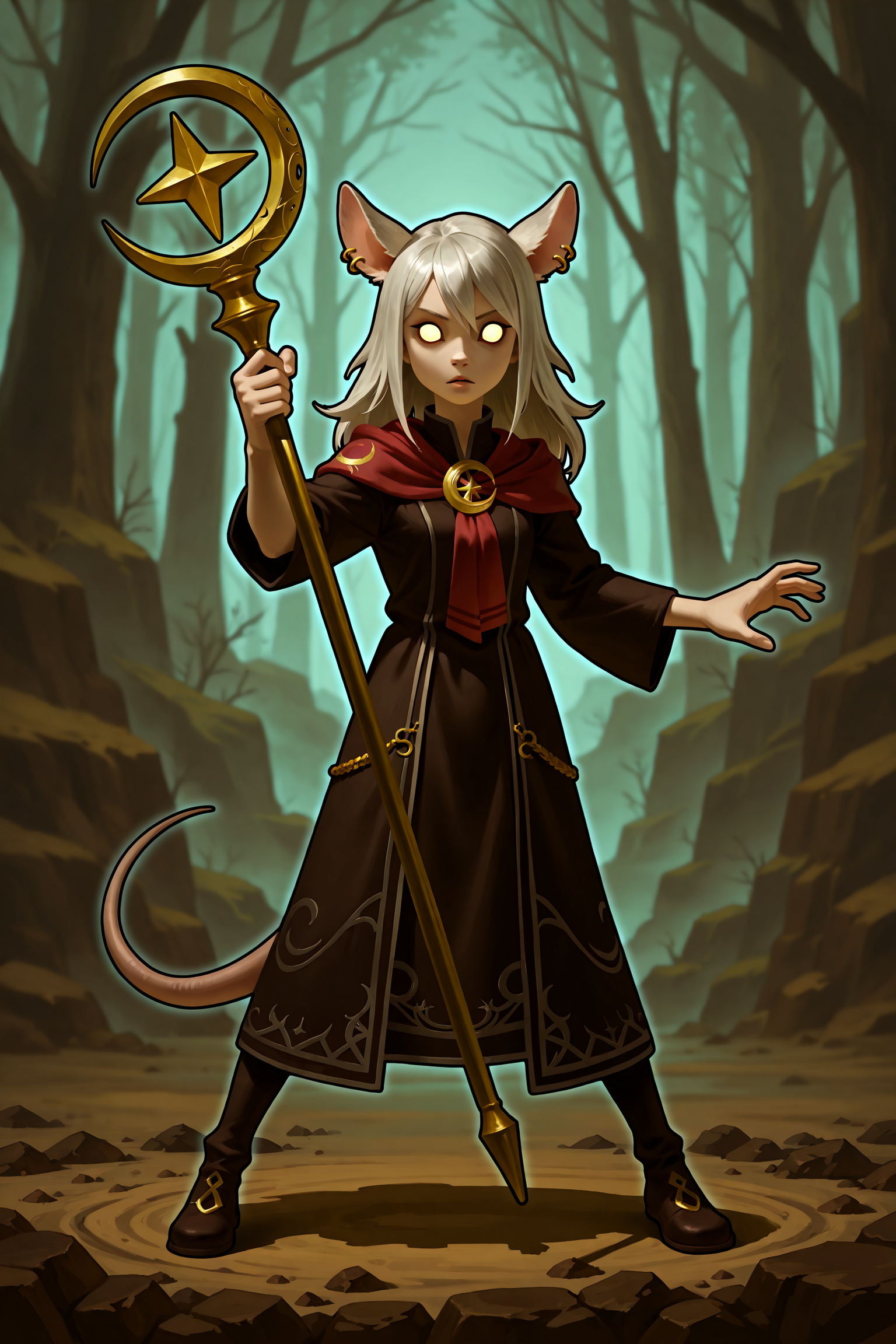
That's why, if you're functionally using the same identical prompt for an image, heck, even if you're using the same seed, you'll still get some variation, because the model goes through and recombines your results in slightly different ways. Let's take a single character, singular, fairly simple prompt, and single LORA for an example: Freya Crescent from Final Fantasy.
Initial Prompt:
"high detail, clean lines, detailed background, depth of field, very aesthetic, high resolution, detailed scenery, newest, best face, ((detailed eyes)), expressive eyes, good anatomy, (character outline, solid outline), digital art (style), sharp shadows, (((flat shading))),
1girl, standing, full-body, full length portrait, solo, dynamic posing, action pose, posing, final fantasy, burmecian, murid, rodent, (((freya crescent))), ears, tail, clothed, fully clothed, staff, holding staff, holding weapon,"
All images generated using base model Nova Furry XL 5.0, Seed: 1234567890, Sampler/Scheduler: dpmpp_2s_ancestral/karras, Sampling Steps 25, CFG scale 5, and upscaled using R-ESRGAN Anime 6B for consistency.
I picked Freya (aside from her cuteness) because she's a fairly well-known furry character, but her unique design means that she's not necessarily going to come out 100% accurately with pure model prompting alone, though as you can see, we got pretty close...
Then, when you add a LORA in, you can get results like this:
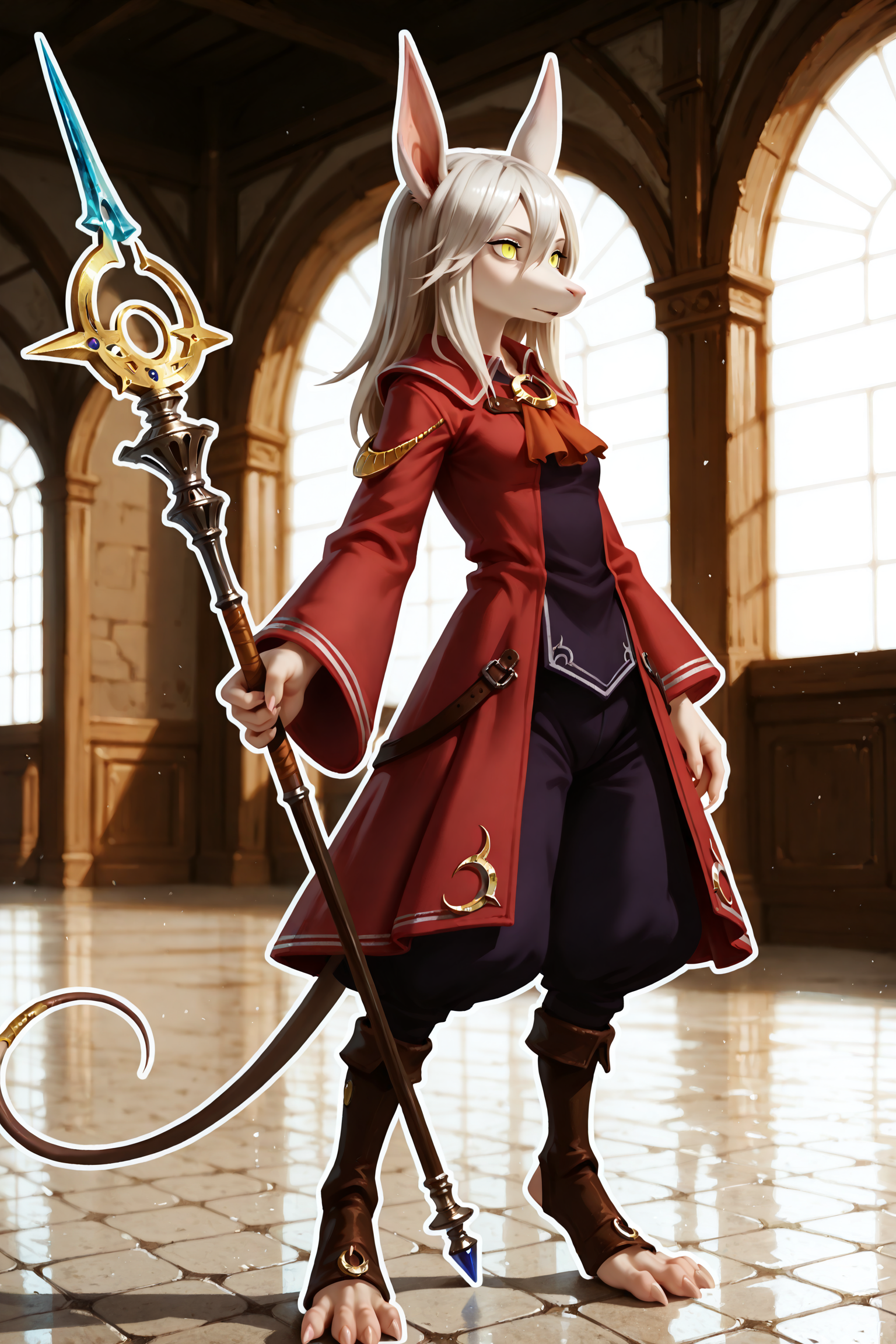
But again, even if you're using the same prompt, you'll get small variations in things like her posing, the background environment, and other fine details like that. Why is that? Remember, the model doesn't just pull noise/data from some area that is, say, “an outline around Freya's body”; it pulls the noising data...for the entire image. For every single tag. For “1girl”. For “standing”. For “action pose”. For “rodent”. For absolutely everything. And anything that a LORA won't “know” about in its dataset, is going to fall back to the base model. For example, most images that served as the training data for Freya probably were solo pics...I am entirely guessing on that, but that's my theory. But even with that, then that explains why some of your pics would come out 3/4 angled, or straight-on front, or even the occasional profile or over-the-shoulder pic, because if it's not specified in the prompt, the model will just guess. It knows I want a pic of her in a standing position, and I want it to be a full-length portrait, but beyond that it doesn't “know” what I want for her pose, so it just throws things at me.
Now, we'll get more into prompting in a minute, and how small word changes can have big effects on the final image, but I want to detour slightly and talk about LORAs and LORA strength for a little bit. You'll notice in the image I linked above, even though my quality prompts call for flat shading, a digital art style, and a character outline, the image still looks like something more “traditionally” AI-art generated. That's because I had the LORA set to strength 1.0. Not a bad thing, but if you're running into a LORA that has a very strong identity, or maybe is even a little overtuned, or overtrained, it will override your prompt to generate images that are in line with its own data. If you're relying on LORAs for significant parts of your image, then you're going to run into trouble. But if you're able to make pure prompting the majority of your image, then you can tone the LORA strength down fairly significantly to still get its effects without ruining your image's intent. For example:
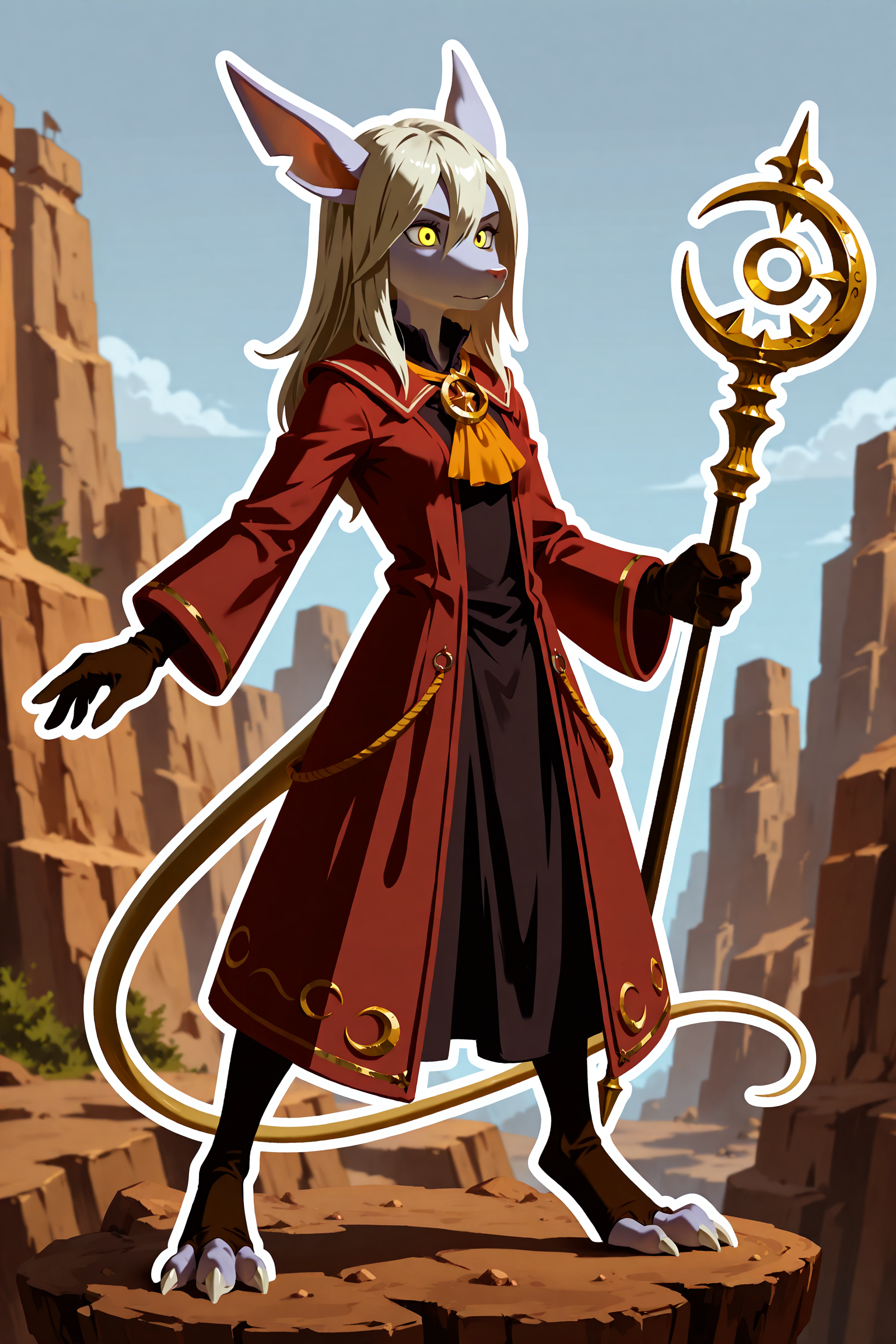
This image is with the LORA strength turned down to 0.4 – it's still visibly identifiable as Freya with her clothes, outfit, and unique design. But it also takes into account my intentions for the image, the flat shading/2d-esque art style.
But that's not all a prompt can do. You'll note in the main prompt, I only prompted that I wanted Freya to be “clothed, fully clothed”, which, of course. But with that in mind, and remembering that the model assumes “defaults” only if you don't have prompts that override its own assumptions, let's put Freya into something more casual, say, a red hoodie and bluejeans:
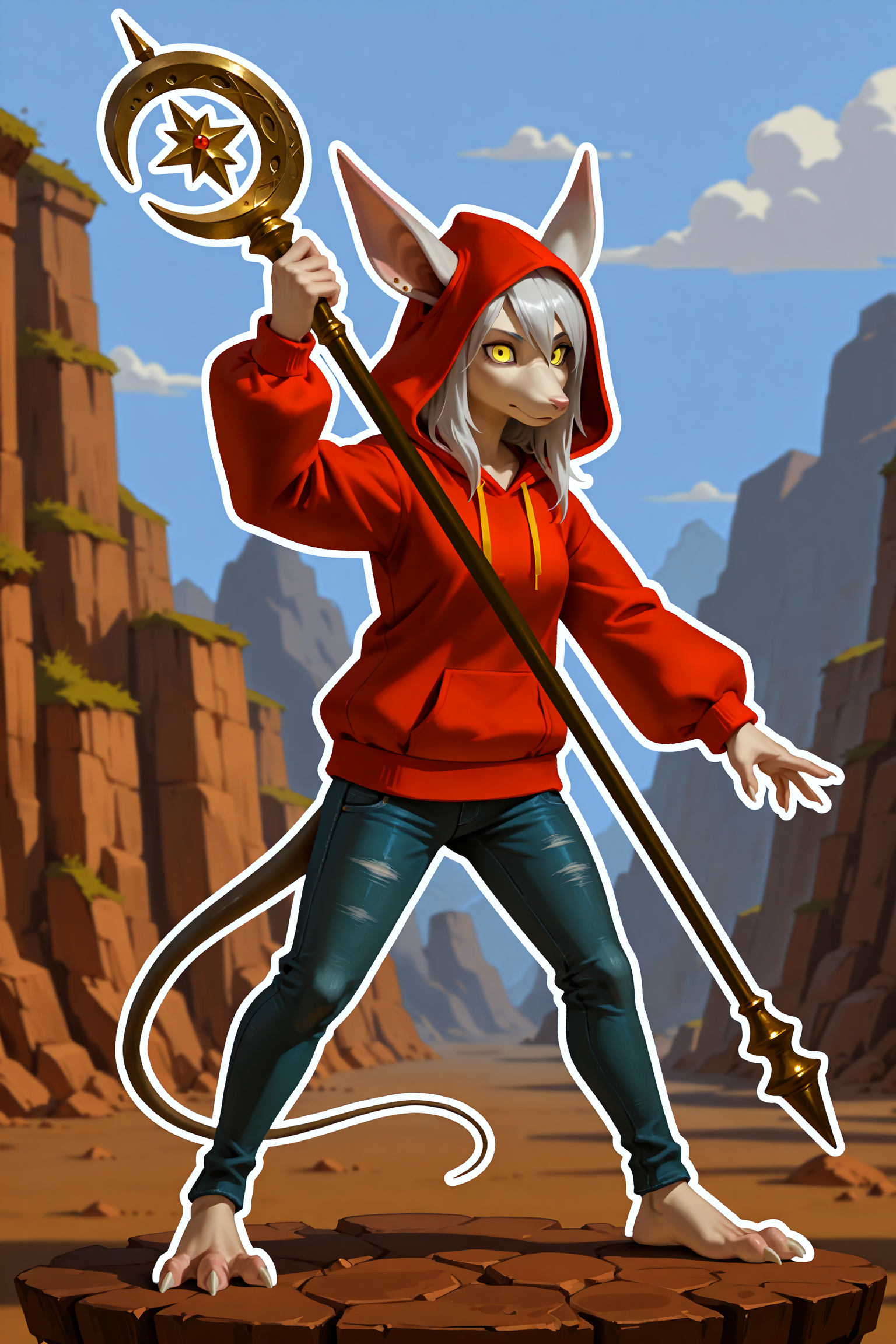
Full prompt: “high detail, clean lines, detailed background, depth of field, very aesthetic, high resolution, detailed scenery, newest, best face, ((detailed eyes)), expressive eyes, good anatomy, (character outline, solid outline), digital art (style), sharp shadows, (((flat shading))),
1girl, standing, full-body, full length portrait, solo, dynamic posing, action pose, posing, final fantasy, burmecian, murid, rodent, (((freya crescent))), ears, tail, clothed, fully clothed, staff, holding staff, holding weapon, hoodie, red hoodie, blue jeans, bluejeans, hood up, ear holes,”
Illustrious-based models are incredibly smart. They have a wonderful understanding of anatomy, and not just in the “certain” fun ways. They all immediately understand that: Humanoid characters are supposed to follow a general body-plan. They have a head, that sits on a neck, that sits on shoulders, that two arms attach to, that a torso attaches to, that has legs, and some form of feet/hands/paws/claws at the ends of those arms and legs. So what that means for prompting is, you don't have to specify that “A red hoodie is a long sleeved garmet that covers Freya's torso...” You can just say “red hoodie”, and the model does the rest. I prompted for “hood up, ear holes” because that's just peak furgonomic design~ LOL
But that's not all! While her outfit is certainly much more casual and comfy, she still looks like she's ready to take on a horde, rather than something that is more appropriate for her attire. So what if we do this:
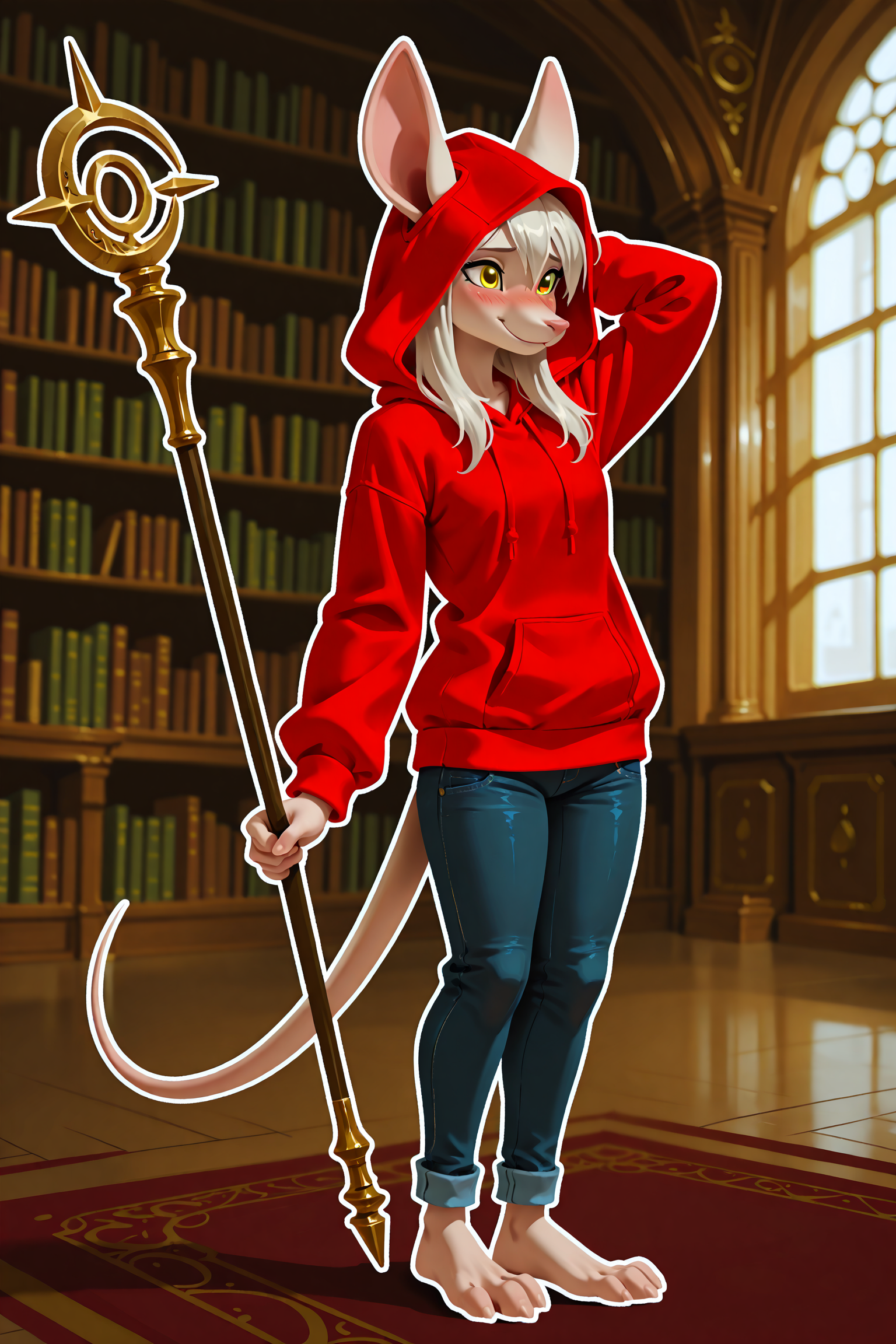
Prompt: “high detail, clean lines, detailed background, depth of field, very aesthetic, high resolution, detailed scenery, newest, best face, ((detailed eyes)), expressive eyes, good anatomy, (character outline, solid outline), digital art (style), sharp shadows, (((flat shading))),
interior, indoors, library, ornate, opulent, luxurious,
1girl, standing, full-body, full length portrait, solo, posing, final fantasy, burmecian, murid, rodent, (((freya crescent))), ears, tail, clothed, fully clothed, staff, holding staff, holding weapon, hoodie, red hoodie, blue jeans, bluejeans, hood up, ear holes, blush, nose blush, shy smile, slight smile, one hand behind head,”
So. What changes did I make? I added environmental prompts, which overrides the default “outdoors” setting that it was putting Freya in, and instead put her in a luxurious, opulent, library interior. She's doing some research into magical artifacts on a casual weekend! I changed her pose, with the “blush, nose blush, shy smile, slight smile, one hand behind head,” set of tags, because maybe she just rolled out of bed and she's a little sleepy yet.
And as you can see, you can entirely change the tone and feel of an image, using just prompting alone and a few tags. Think of it this way: An imagegen model is like really fast, multilayer Photoshop, in a sense. You start with the “base” image that it thinks it should be, and you work up from there. Any changes you make in the prompt will be adhered to, to the best of its ability, 100% (e.g., environment changes override the default, outfit changes override the default, expression changes override the default, etc).
But like I said at the start, if you're getting results you like, definitely continue to work with your own style! More creativity is always better, and more artists offering their thoughts into the space will make things more vibrant and wonderful for the entire community!
