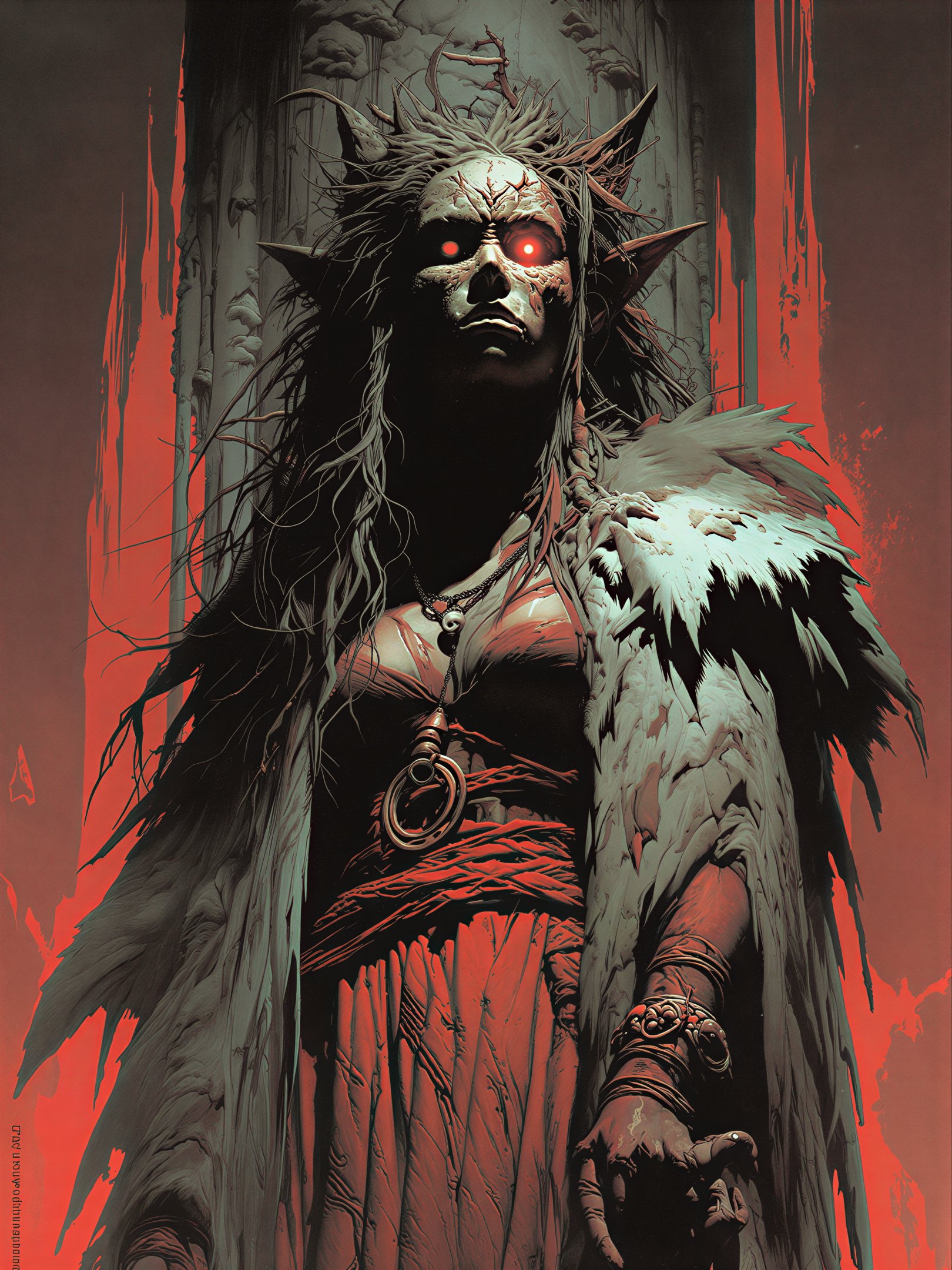
COMPOSITION AND STRUCTUREThe composition is a vertical monument of stillness/ organized around the rigid axis of the figure's spine which acts as a dark pillar against a bleeding crimson horizon. The eye travels immediately to the face where the flat/ mask-like geometry of the skin contrasts violently with the organic chaos of the fur mantle cascading down in heavy/ downward-flowing layers. This arrangement creates a triangle of tension between the static head and the voluminous weight of the wolf pelts. The background recedes not into depth but into an expanding wall of monolithic color that presses against the figure/ eliminating escape routes and forcing a frontal engagement where every millimeter of space is saturated with intent.COLOR AND LIGHTThe dominant atmospheric color is a deep/ arterial crimson red that suffocates the air like thick blood mist or dying twilight fire. This crimson wash physically touches the bare shoulders first/ turning them into veins of exposed muscle against the darkness. It pools heavily in the recesses of the fur mantle where black shadows meet red light/ creating a vibrating edge between the two tones. The crimson background is not passive; it bleeds onto the edges of the wolf pelts/ staining their tips with the hue of violence and ritual. Light sources are absent as external entities; instead/ the illumination emanates from within the scene's color itself/ acting as a subsurface scatter that makes the scarification marks on the cheekbones glow like heated metal ridges against the cold skin/ while the bronze clasp catches a singular/ sharp specular highlight of pure white fire.OBJECTS AND SYMBOLSThe face serves as a altar to the void/ its neutral expression functioning not as emotion but as a warning signal that transcends human empathy; the eyes are the only living things in the frame/ tracking with predatory intelligence while the mouth remains sealed in silence. The raised scarification marks on the cheekbones are ritual wounds turned into architectural features/ catching the crimson light to reveal their physical depth as ridges carved for power or pain. The massive mantle of black wolf pelts is not merely clothing but a second skin representing raw animalistic dominance and primal instinct draped over human form. It holds the weight of the wild while the single bronze clasp acts as the only link between civilization's order (metal/ geometry) and nature's chaos (fur/ blood). The crimson environment itself is an object of dread/ functioning as a curtain of judgment that surrounds and judges the figure equally.REFERENCES AND DIALOGUESThis image speaks directly to the tradition of Gothic horror meets Cyberpunk neo-samurai aesthetics found in the works of H.R. Giger/ where organic biomechanics meet brutalist architecture/ filtered through the solemn stillness of Japanese Edo-period yōkai prints and the psychological intensity of Francis Bacon's distorted figures. It dialogues with the mythological figure of the shaman who walks between worlds/ wearing the fur of beasts to command spirits while maintaining a god-like detachment in their gaze. The visual language is one of high-contrast chiaroscuro where light does not reveal but separates good from evil/ drawing upon the visceral horror of H.P. Lovecraft's cosmic entities and the ritualistic weight found in medieval tapestries depicting martyrdom/ but rendered with the cold/ digital precision of modern editorial photography that feels ancient all at once.